
山本屋のこだわり
Commitment
Traditional production method inherited over many years
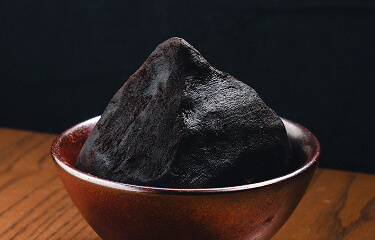
The artisan’s day begins with the preparation of miso, a blend of specially prepared miso, dashi broth, and udon noodles. The key to preparing miso lies in mastering the moisture and water content of the ingredients purchased that day. This is a tradition passed down from the Taisho era at Yamamotoya, and the method of preparation is still practiced today.

The attention to detail that goes into each and every bowl of misonikomi udon
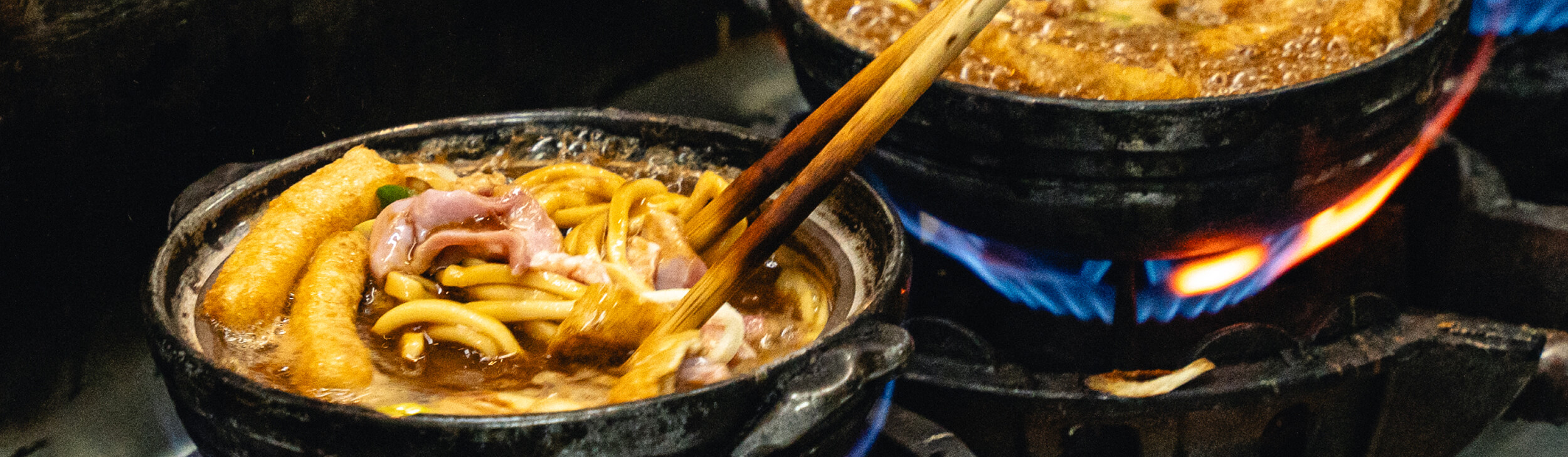
Miso-stewed udon is delicious when simmered all at once over high heat in a short amount of time. Because it is simmered all at once in a short amount of time, the timing of adding noodles and ingredients is extremely important depending on the weather that day.
Furthermore, since each clay pot is in different conditions, we pay close attention to adjusting the heat.
Commitment
Commitment to hand-made noodles
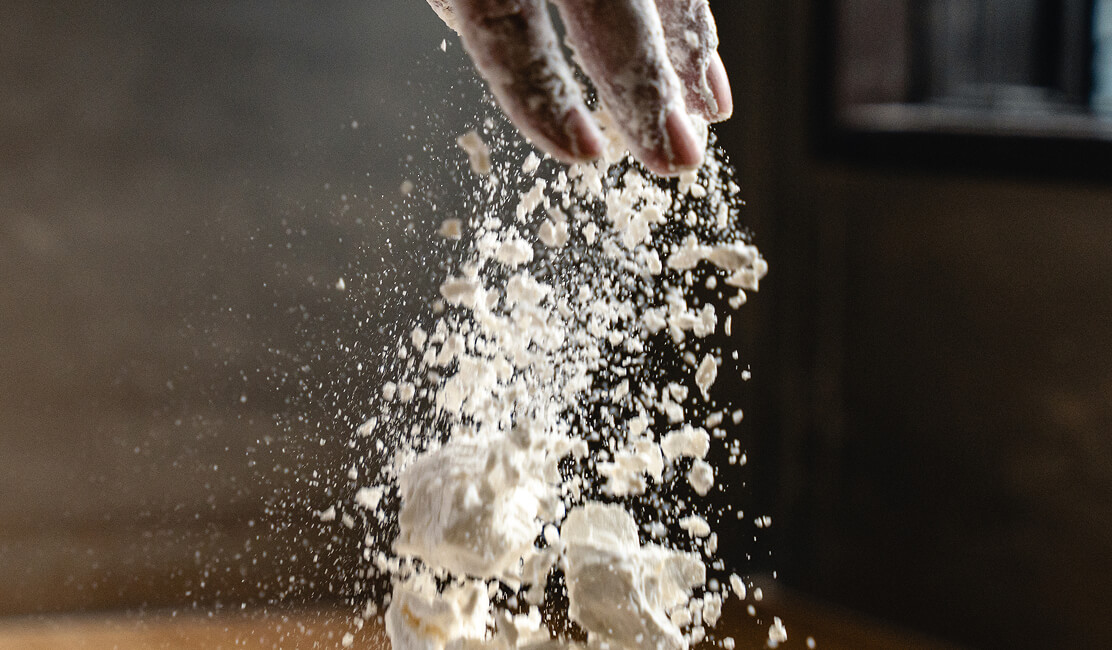
Hand-made noodles are made in a restaurant that is illuminated by the skill of the craftsman.
Yamamotoya’s miso nikomi udon noodles feature hand-made noodles made with only udon flour and water, without the use of salt. Just before serving, our chefs knead, stretch, and hand-cut the noodles in one go, ensuring that the Hatcho miso sauce clings to the noodles all the way to the core, and that they retain a firm texture even when cooked in a clay pot.
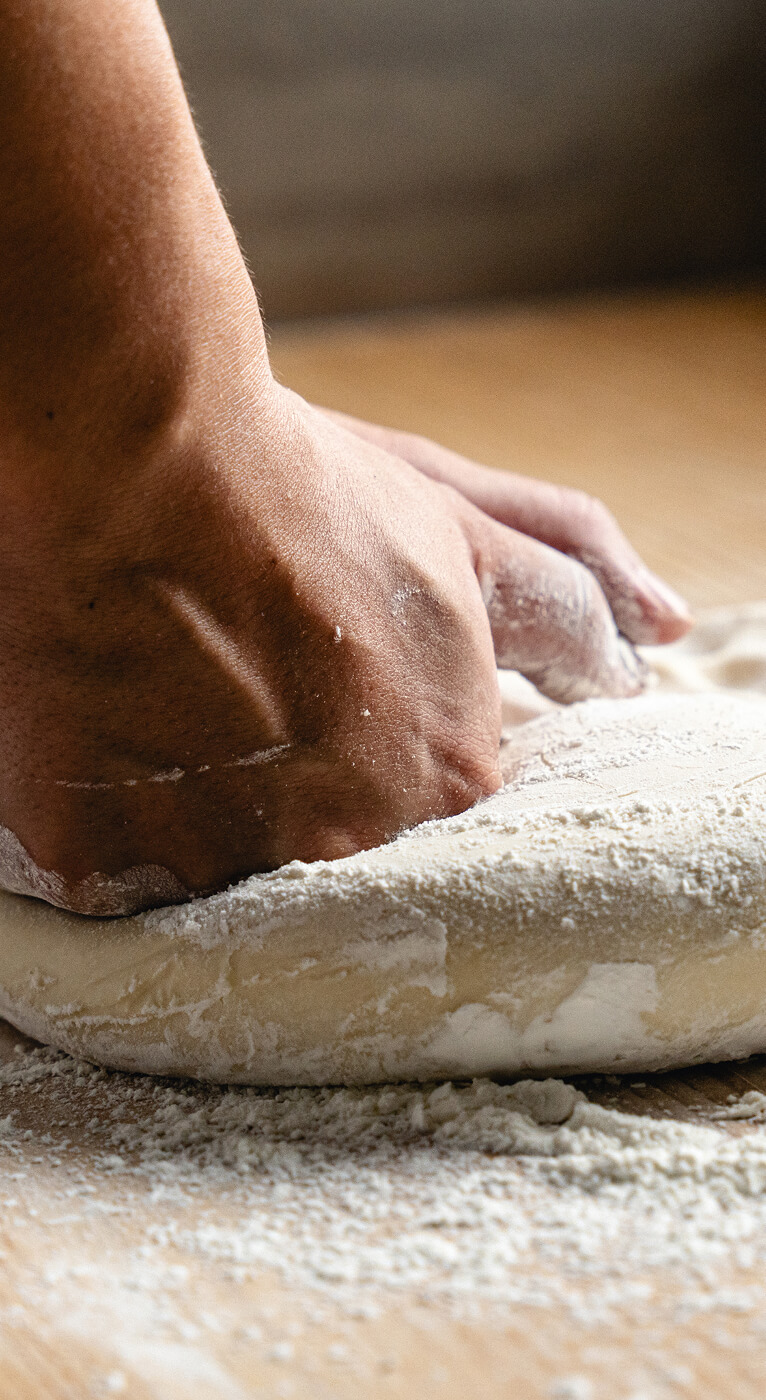
Kneading process
Yamamotoya’s miso-stewed udon is “hand-made noodles,” which are kneaded using only udon flour and water, without using salt. Just before serving, the craftsmen finishes the kneading, noshishi, and hand-cutting all at once, and the noodles are entwined with the yacho miso sauce to the core, leaving a strong, firm texture even in the clay pot. The deep flavor spreads with each bite and the original wheat aroma that you can feel the more you chew it, further enhance the traditional flavor.
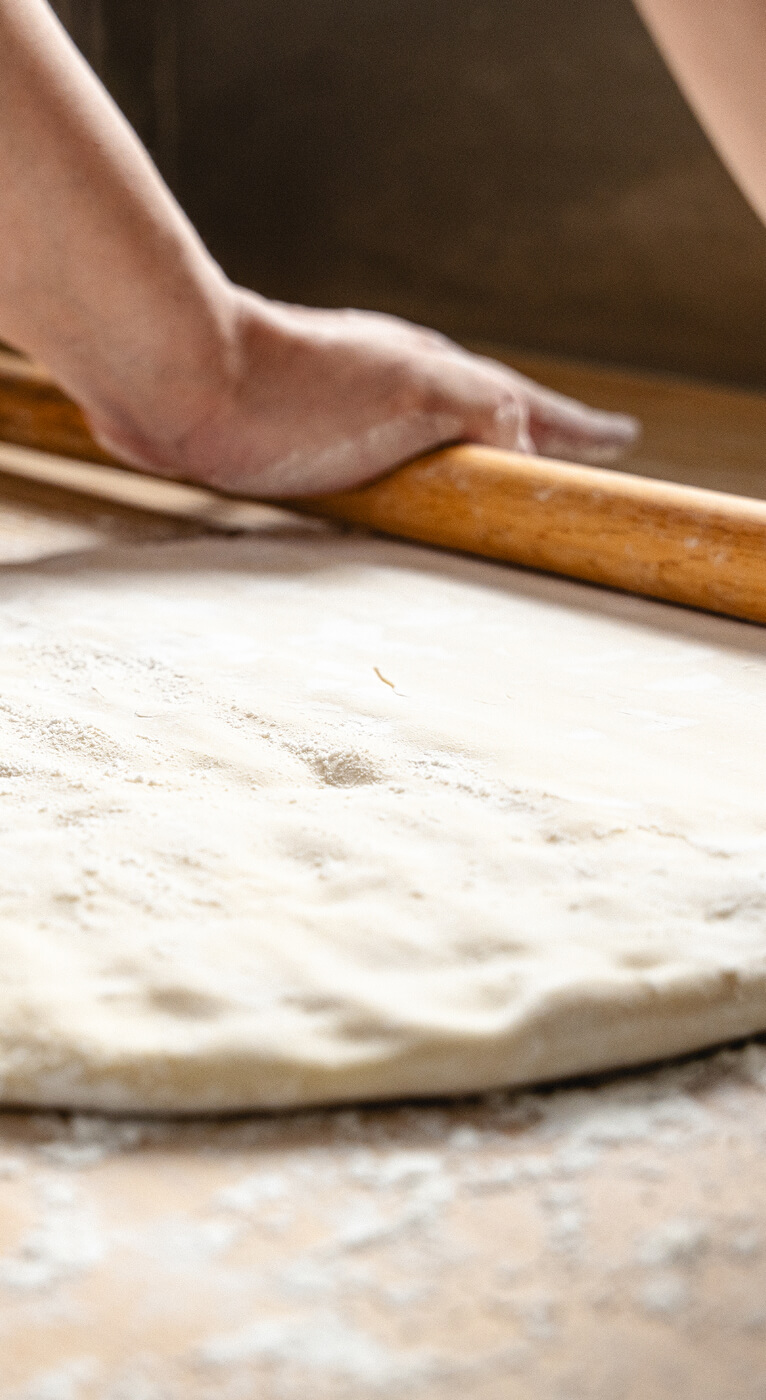
Rolling process
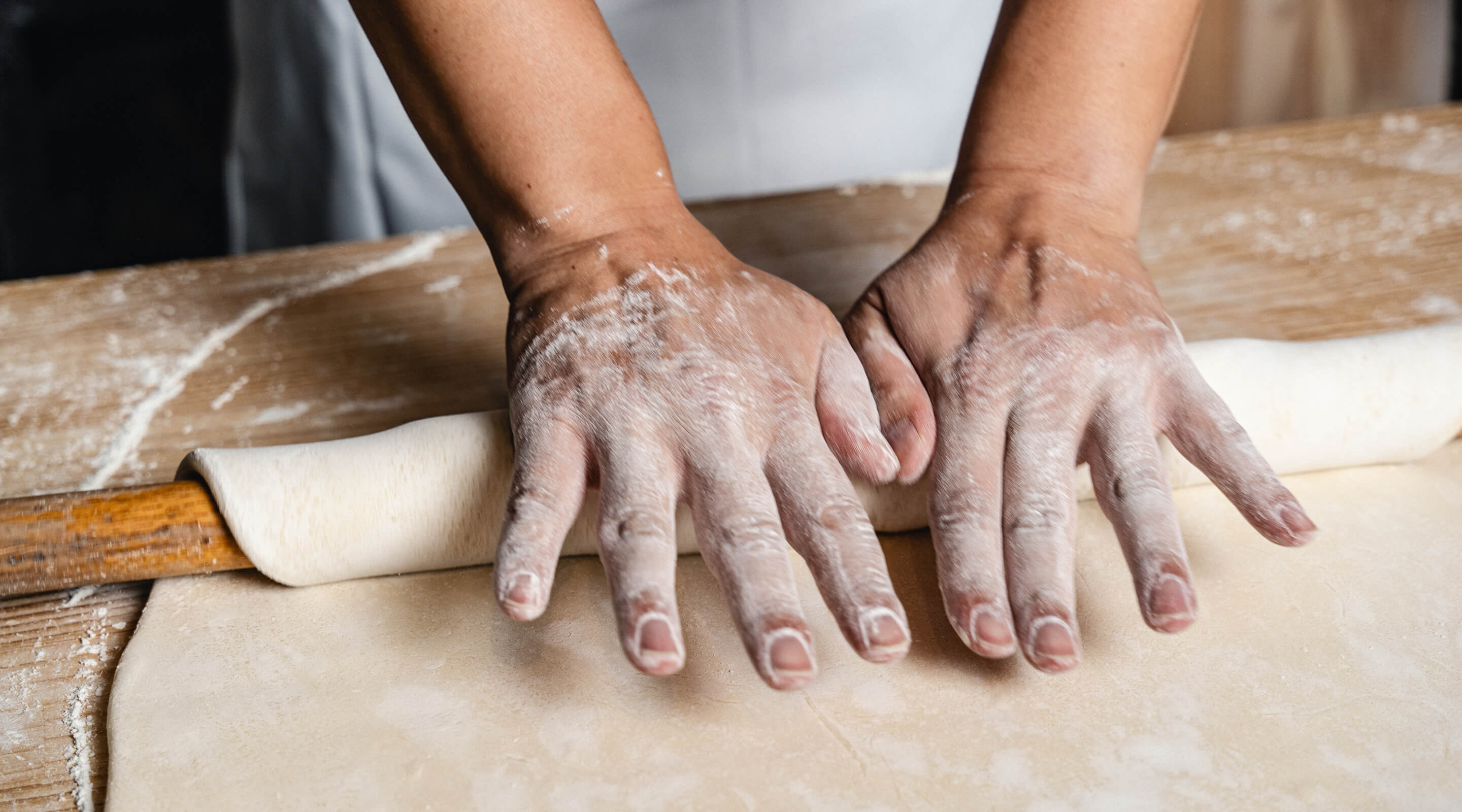
Once the dough is kneaded and allowed to rest, it is then rolled out. A distinctive feature of this process is that as it is rolled out, the dough makes a satisfying “slap, slap” sound on the noodle board in response to the force of the rolling pin. This is the origin of the name “menuchi.”
At Yamamotoya, we roll our noodles several times during business hours so that our customers can enjoy noodles that are as freshly rolled as possible. We roll the noodles out evenly so that they are not too thick and are of an even thickness.
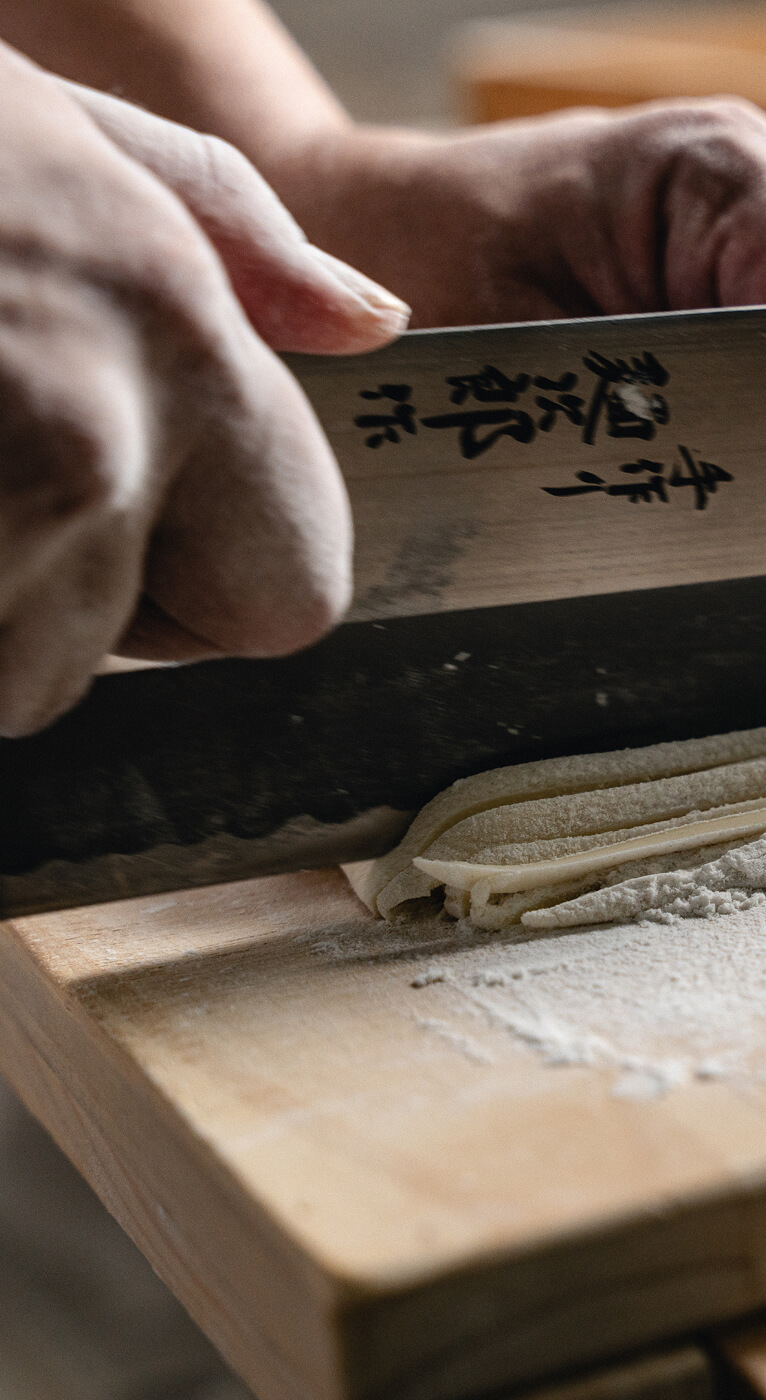
Cutting process
Sprinkle the stretched dough with bob flour to ensure that the knife fits in neatly, and it’s finally time to finish the final touches.
The noodles are evenly cut by fine hand-sized hands, making them look beautiful and give them a smooth texture.
The craftsman’s concentration and courtesy stand out even more at this moment.
※Rice flour is used in some locations.
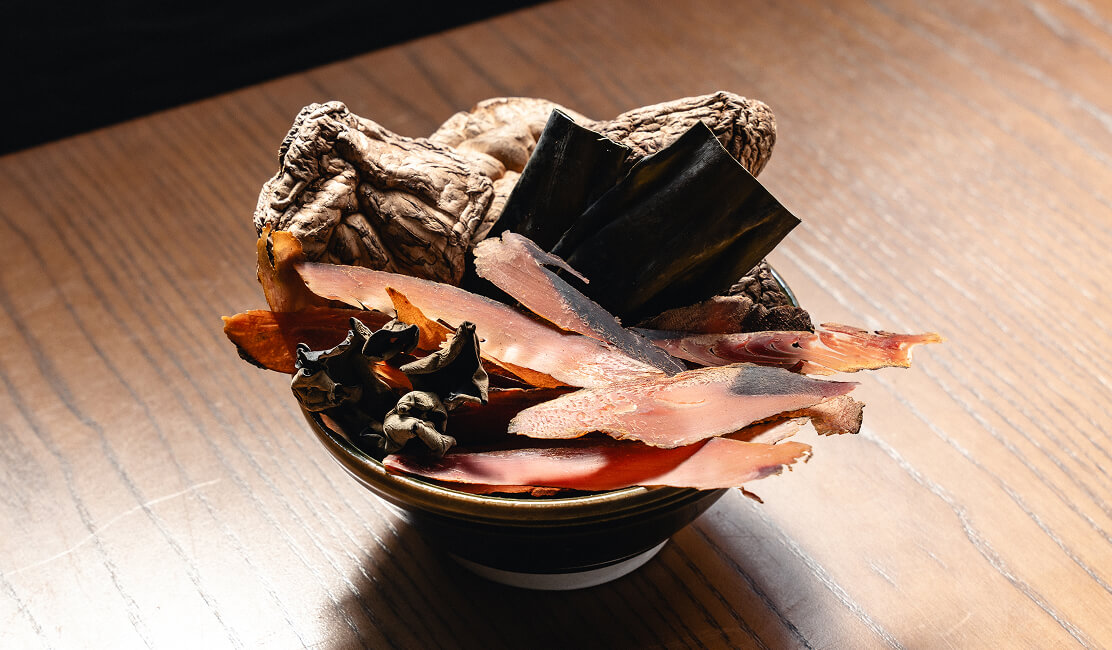
Commitment to ingredients to stew
The ingredients used at Yamamotoya are carefully selected and procured by our artisans, so we can confidently recommend all of them.
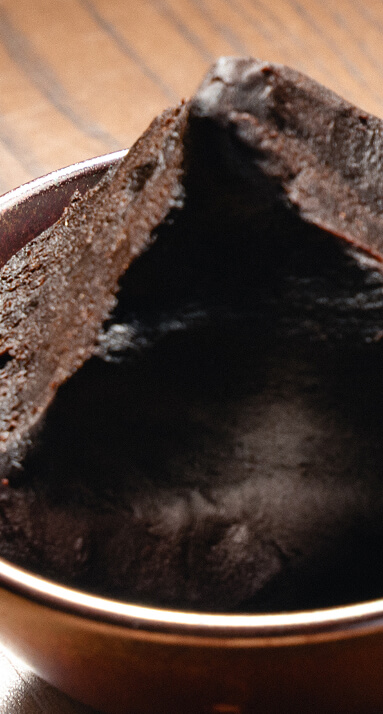
Miso
Yamamotoya’s miso is luxuriously made from Hatcho Miso, aged three years from Kakukyu, a long-established miso storehouse in Okazaki, founded in 1645. Yamamotoya’s “Aji Miso” is based on Hatcho Miso and is blended using a unique method of several types, including locally-produced white miso, and cooked slowly until it is glossy.
By cooking slowly and slowly by a craftsman without using a machine, you can create a deep flavor. This is one of the traditional manufacturing methods that have been passed down since the Taisho period, which we continue to protect today.
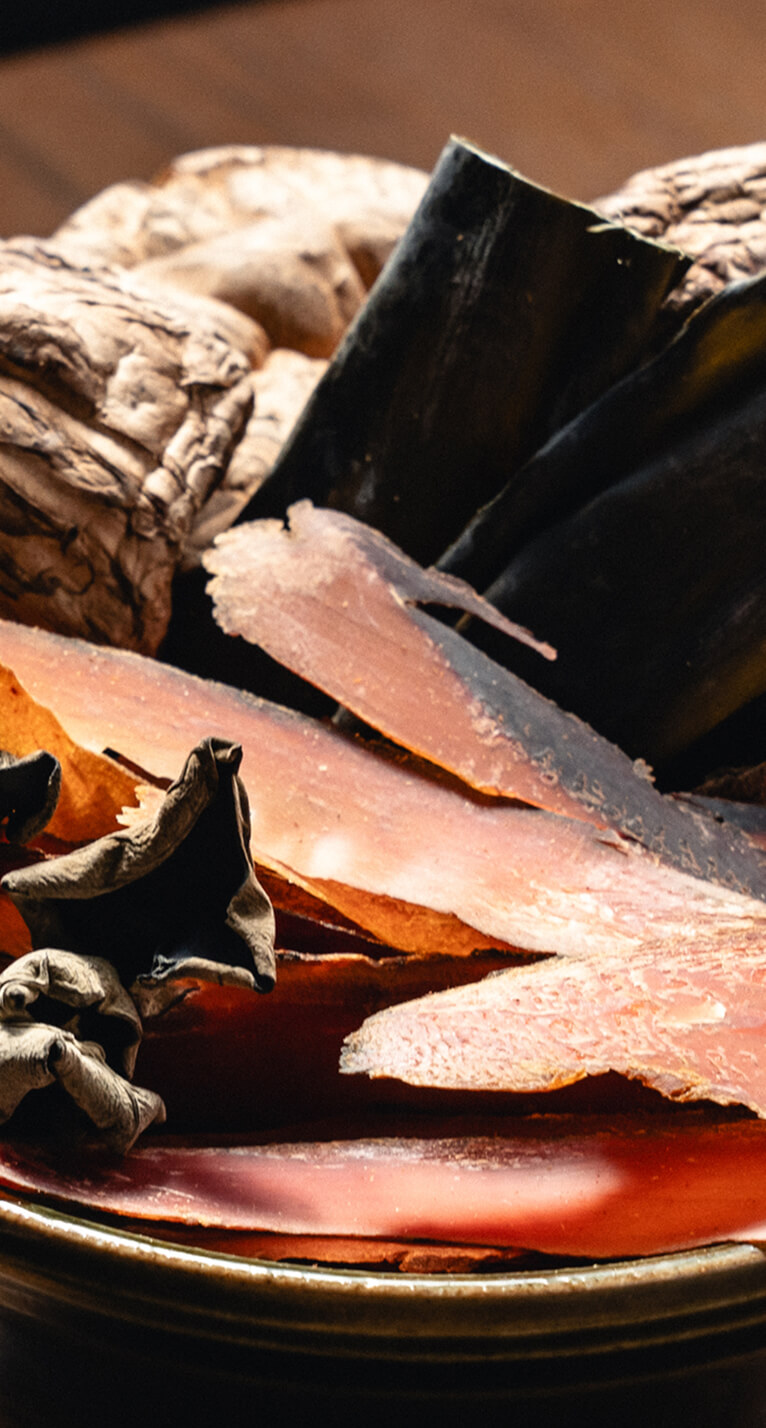
Soup Stock
It is a special dashi stock made with a variety of ingredients, including bonito flakes, horse mackerel, and sardines, and blended to match the color of the ingredients of the day. The carefully extracted flavors blend together to create a richer, more mellow taste. These are not always made with the same ingredients in the same amounts, but are blended and cooked taking into account the season and the condition of the ingredients available at the market each day. Because it is made to suit the environment of the day, the dashi stock itself has a lively flavor.
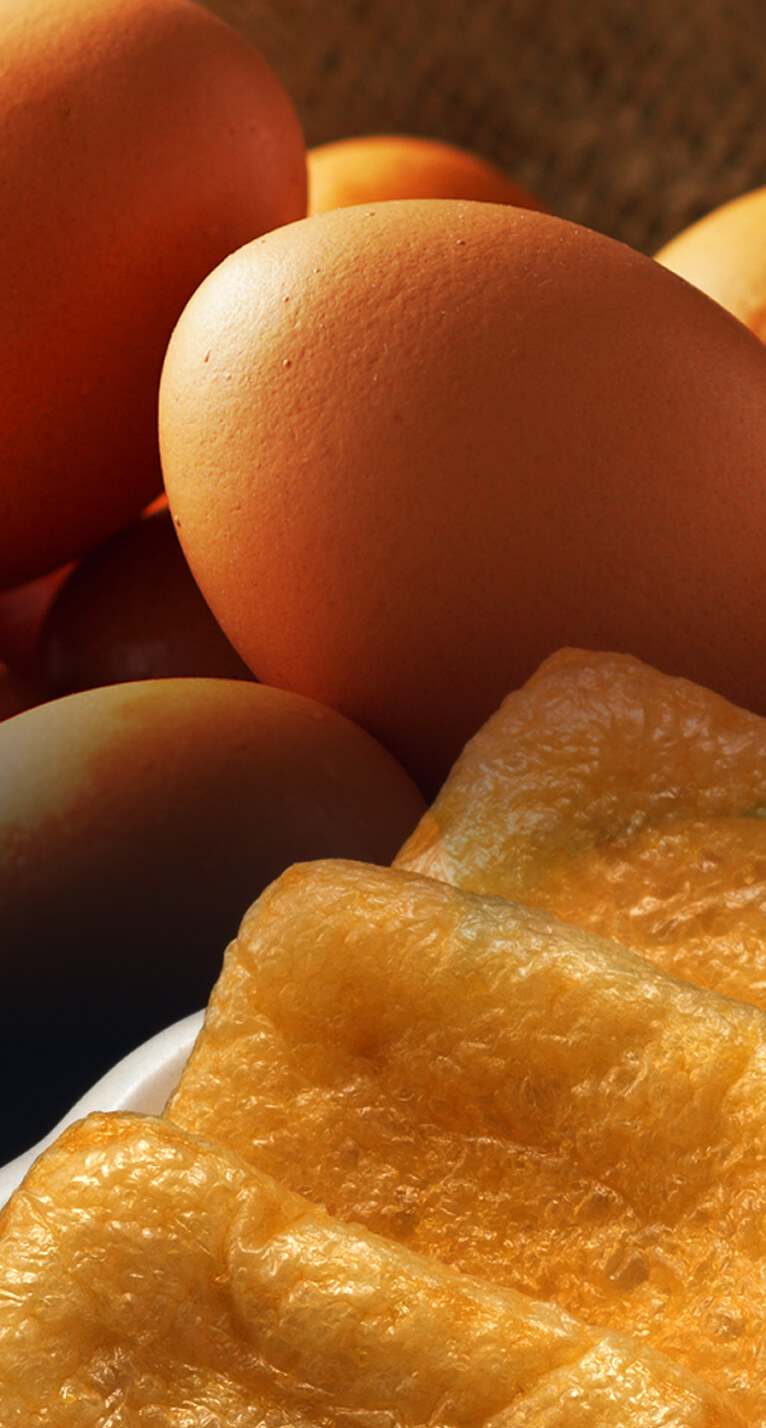
Eggs and Deep-fried Tofu
The eggs and deep-fried tofu are made with fresh domestic eggs and deep-fried tofu, which have a strong flavor that rivals the misonikomi udon.
Adding them to the piping hot misonikomi udon brings out even more umami.
The sweetness of the runny eggs and the savory flavor of the deep-fried tofu blend with the rich miso sauce, creating an even deeper flavor.
The harmony changes with each bite, making the meal even more enjoyable.
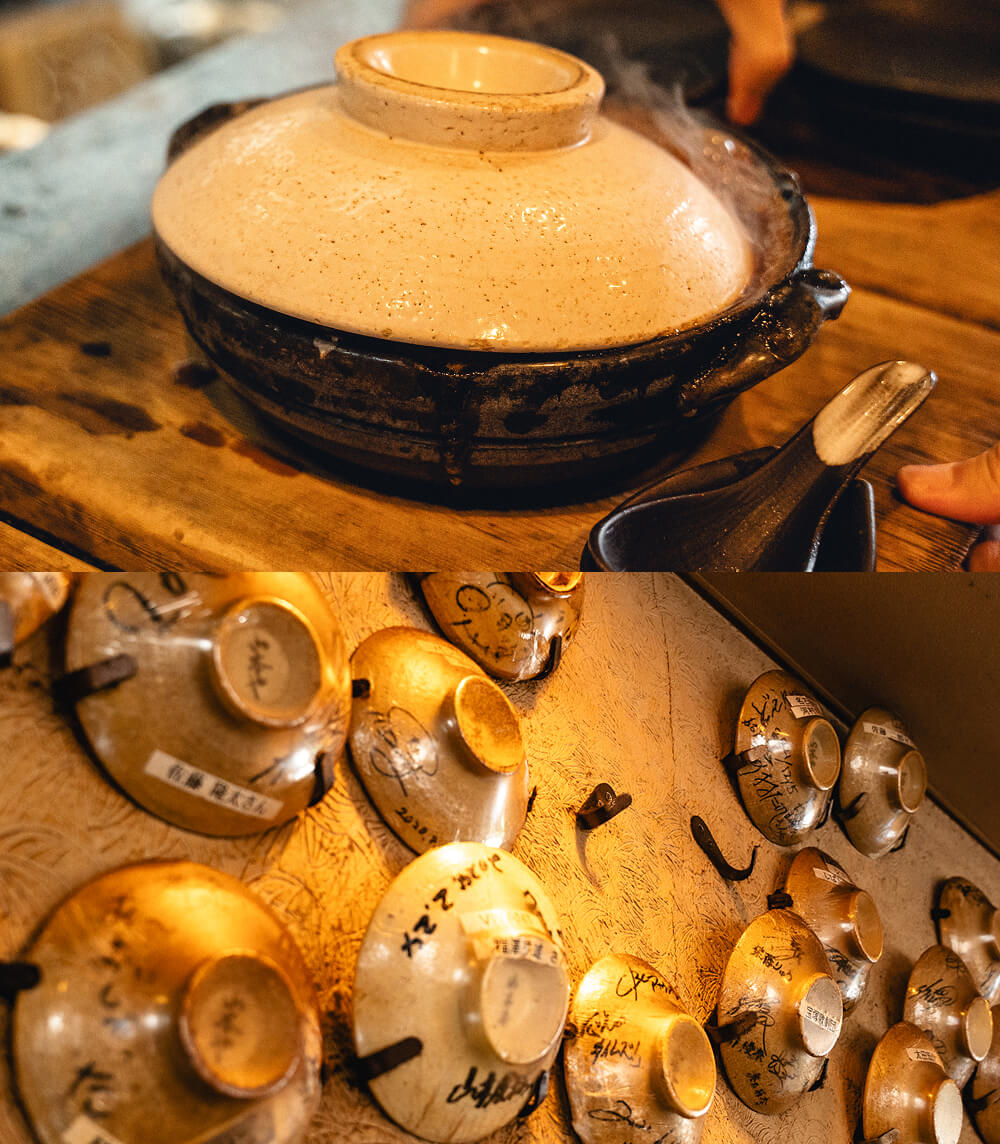
Our commitment to the clay pot
Yamamotoya’s specially crafted clay pot, designed exclusively for Miso Nikomi Udon, enhances the flavor and richness of every simmer.
Iga-yaki earthenware pots enhance the stew’s flavor. The earthenware pots used at Yamamotoya are custom-made Iga-yaki pots to ensure the most delicious misonikomi udon. Because they are cooked over extremely high heat, the pots develop a pattern of fine cracks called “kannyu,” which form in the ceramic glaze. It’s no exaggeration to say that the artisans’ unique kannyu and misonikomi udon combine to create the flavor that’s been cherished at Yamamotoya since the Taisho era. Furthermore, the earthenware pot’s flavor deepens with age.
Like the earthenware pots themselves, the lids are also custom-made for Yamamotoya. Unlike typical udon lids, they lack holes. The heat from the piping hot misonikomi udon keeps the lid hot. This allows the udon to be served even hotter than when served on a regular serving plate.